Case study · T-Mobile
Touchstone: a heartbeat between two stones
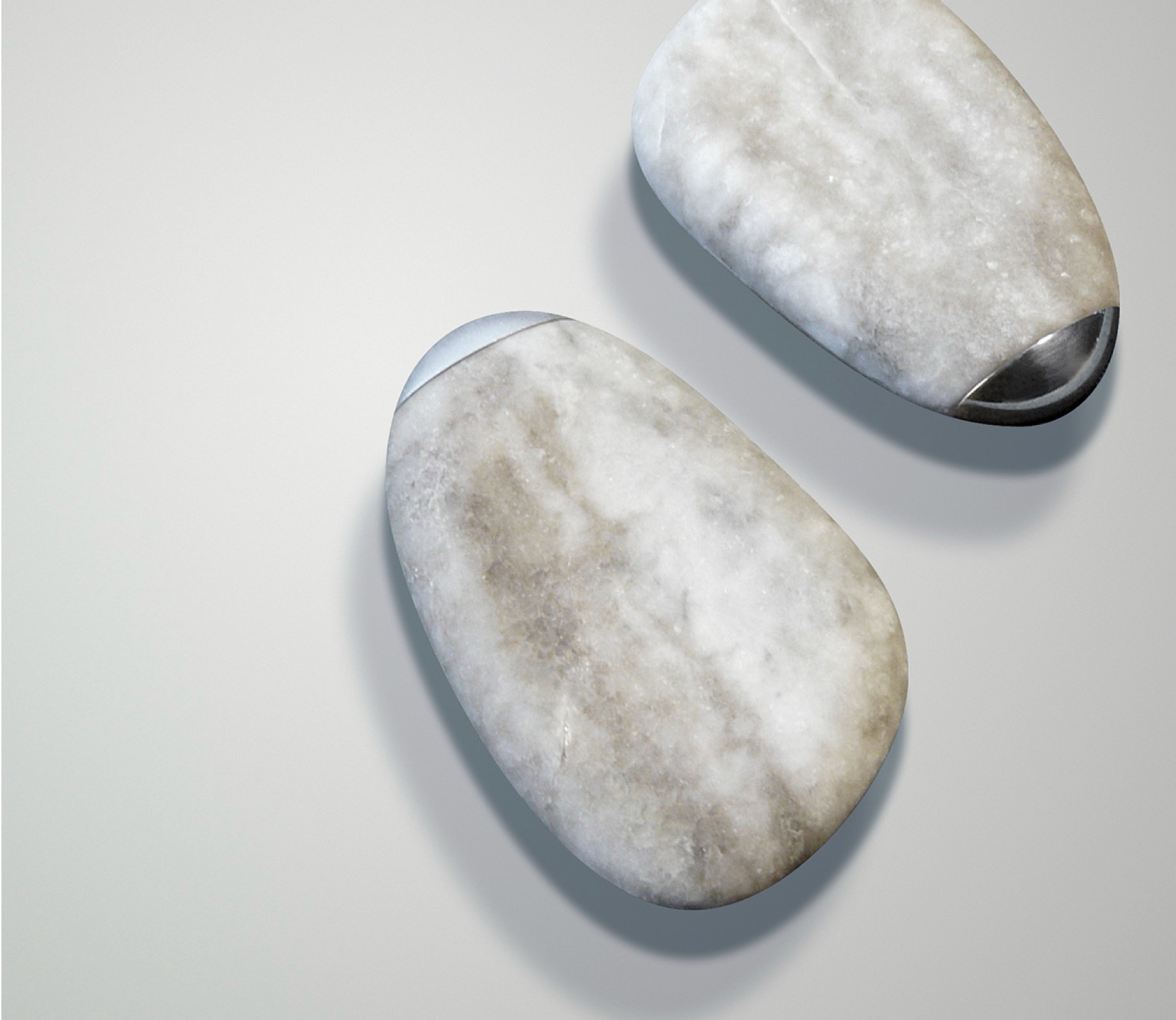
At T-Mobile's Creation Center we designed and prototyped a pair of alabaster stones that let two close people reach each other without words.
- Role
- Innovation producer
- Organization
- T-Mobile
- Partner
- Teague (prototype electronics)
- Platform
- Paired stone accessory, linked by Bluetooth to an Android handset
In short
- 01Smartphones had become good at productivity but flat as a way to feel close to one person, so we set out to make an object with one purpose: a direct line between two people.
- 02We built a working pair: squeeze one stone and its mate pulses like a heartbeat and glows; hold both at once and they show white light, like holding hands.
- 03In-depth interviews with couples and caretakers showed the stone read as comfort more than romance, and pointed the next version toward customization, color-coded messages and a wearable form.
- concept video
- industrial design directions · Autodesk Alias renders
- interaction profiles · light and vibration states
- hardware prototyping · Arduino, Bluetooth, capacitive touch
- software prototypes · handset and app versions
- in-depth interviews · 10 couples, 4 caretakers
- research paper and patent filing
01Opportunity
Phones had become good at everything except closeness
Smartphones were great at productivity, but as telephones they had lost something. Touch screens and apps were pulling them toward more and more behaviors, and the simple, intimate line from one person to another was getting thinner.
At T-Mobile's Creation Center we asked what a device with only one purpose could do: give two close people a direct line that cuts through the noise, and say something a smartphone can't.
The project was called Touchstone. Our paper calls it Heartstone.
02Hypothesis
Two stones, one gesture, no words
The bet was that a natural object, not another screen, could carry a feeling. Each stone is paired with one other stone and nothing else.
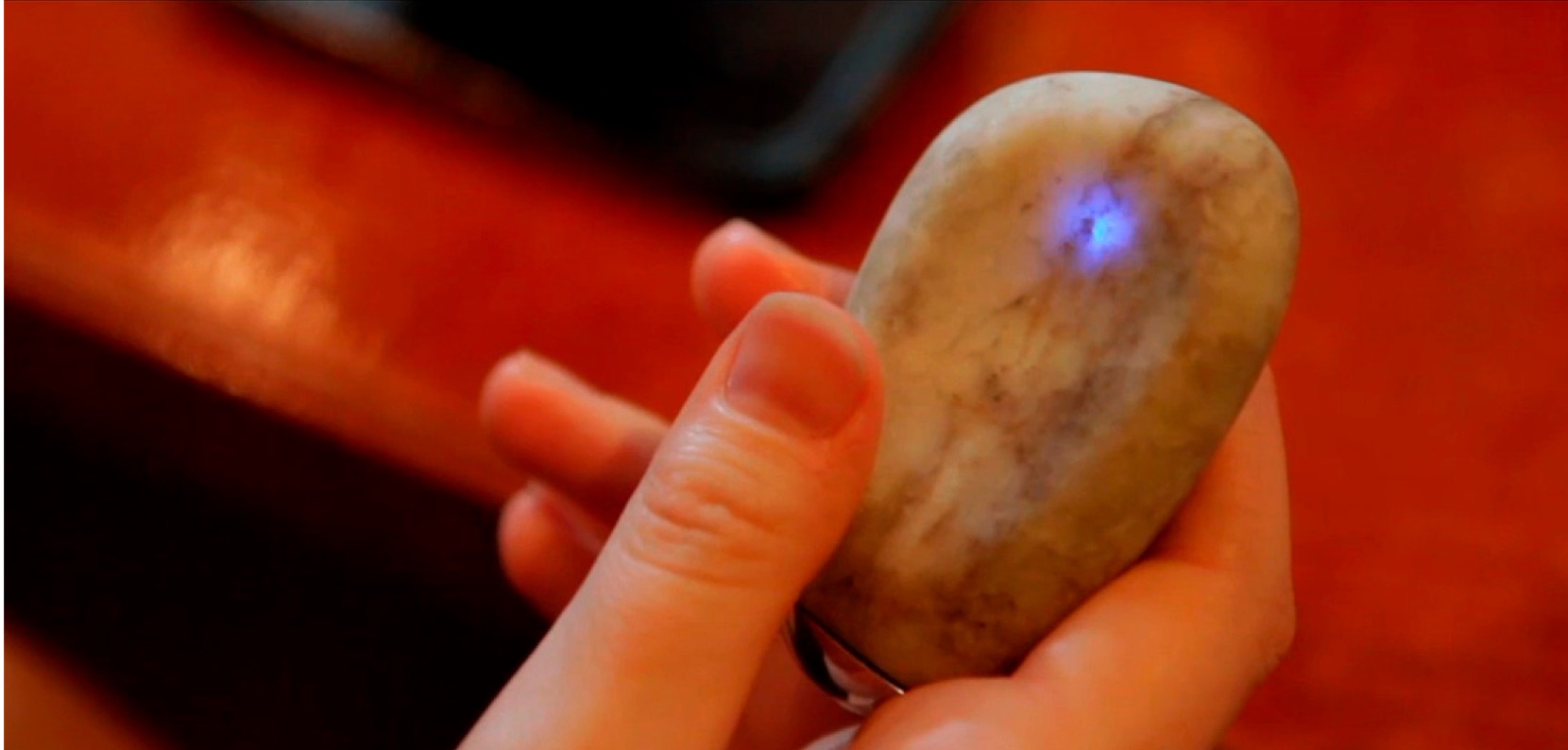
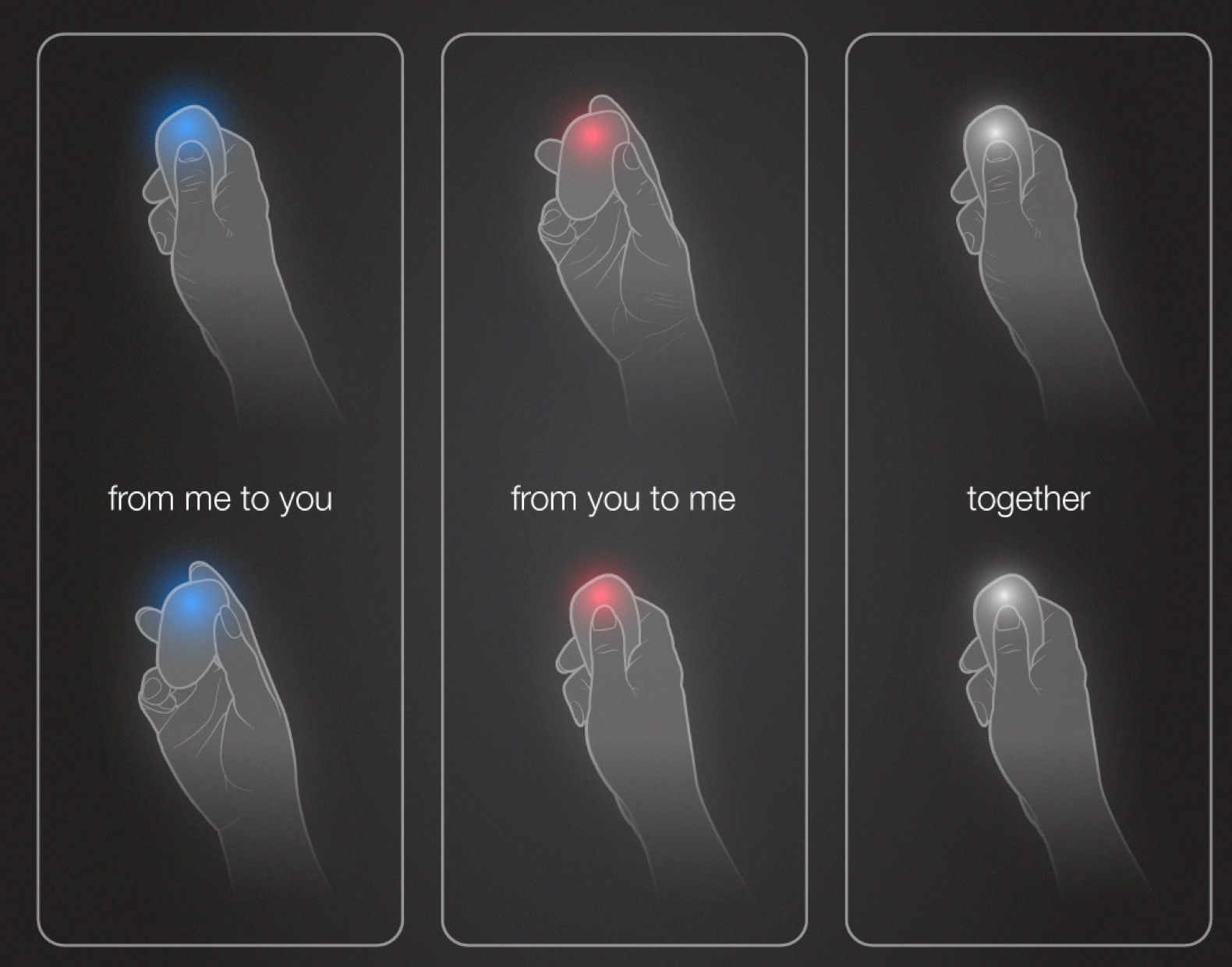
Squeeze yours and its mate pulses with a vibration like a heartbeat and glows. You can do it while the other person is holding theirs, which feels closer to being together, or leave it as a wordless message for later. When both stones are held at the same time, both show white light and a heartbeat, designed to feel like holding hands.
We wrote the quieter states as interaction profiles too: a quick vibration and a green glow at power on, and a slow warm green pulse on standby.
03Form
We explored the object before the electronics
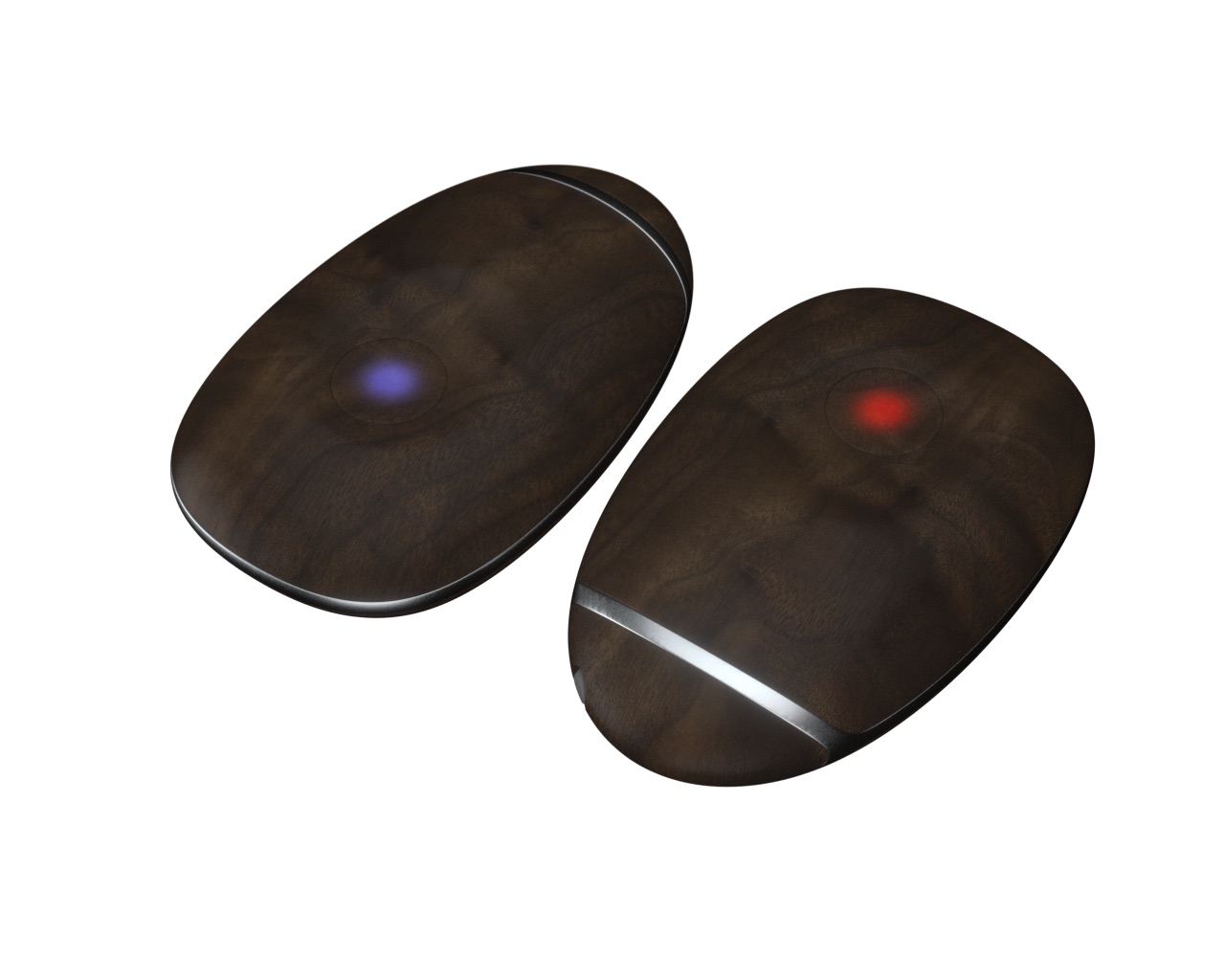
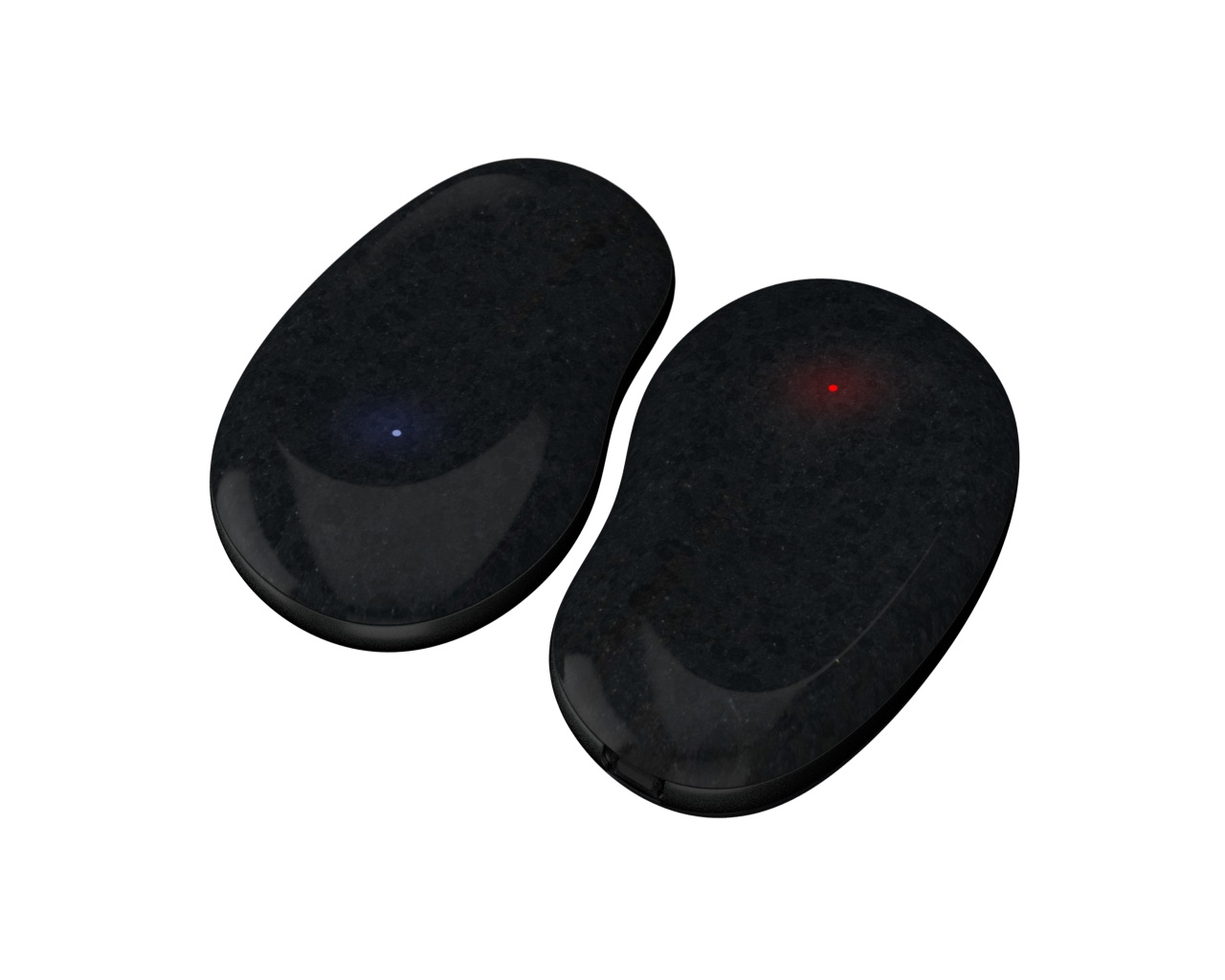
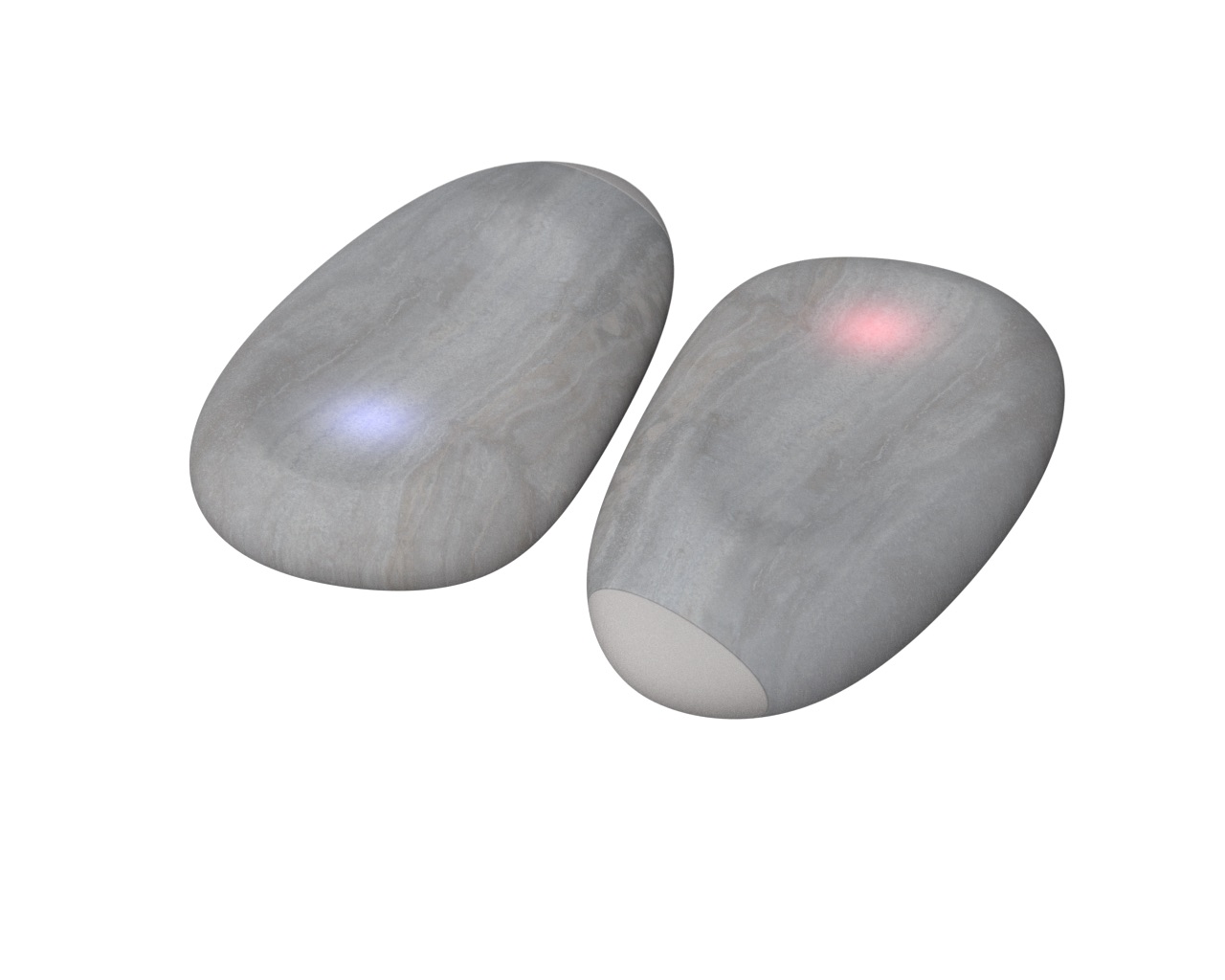
We rendered several directions for the stone's material and finish, each with the paired glow shown, to find a form that felt organic rather than technical.
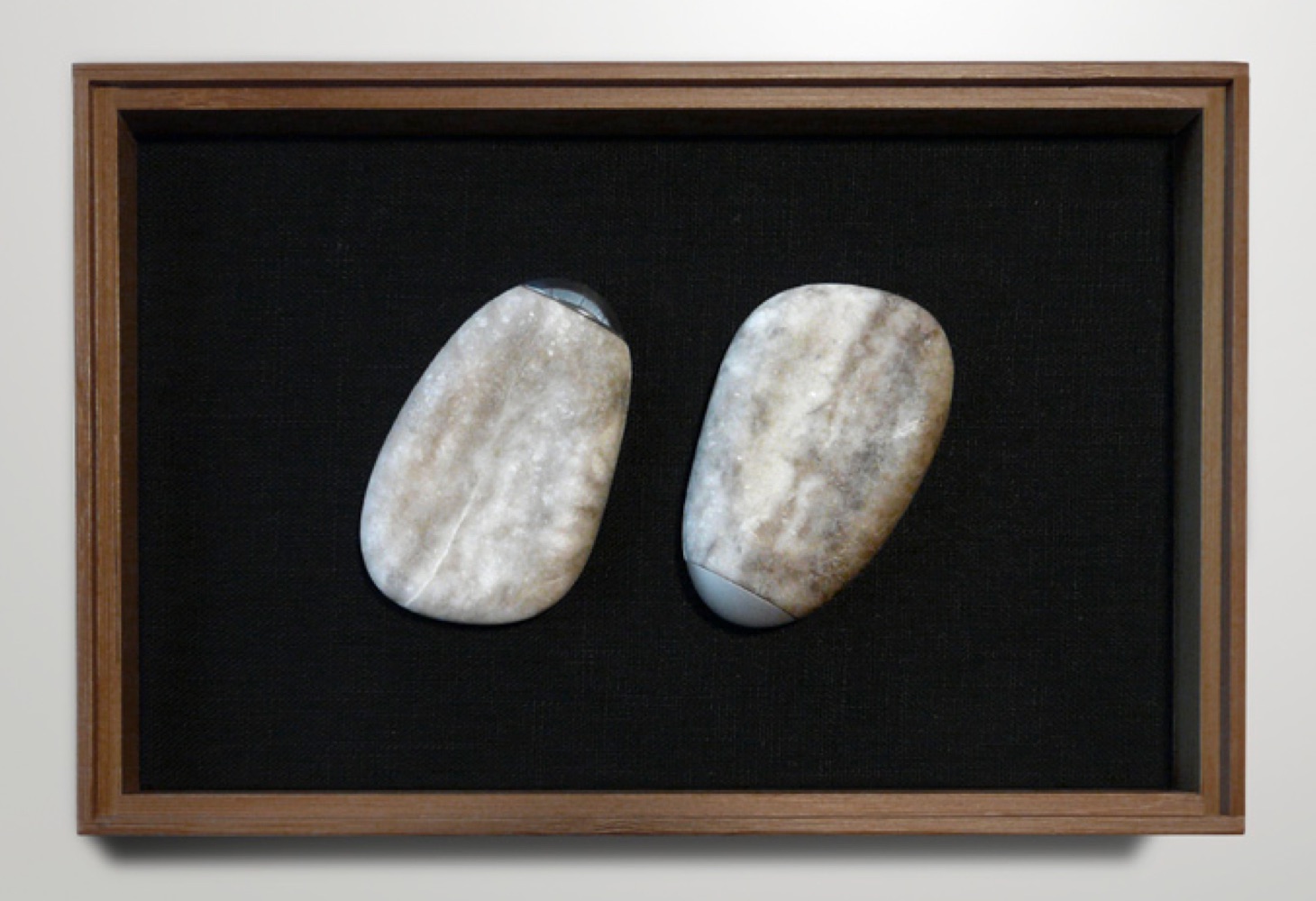
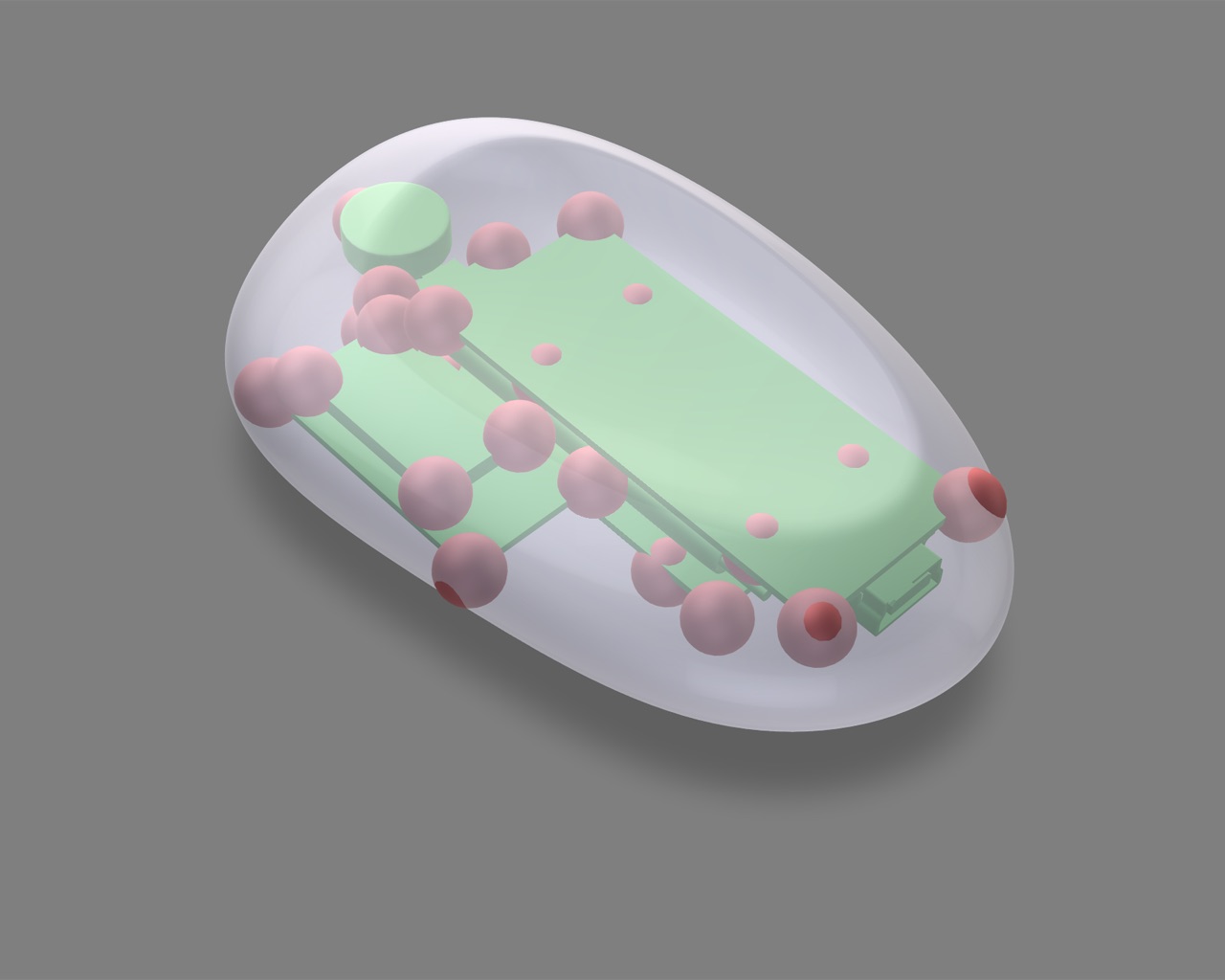
We chose alabaster: two pebbles about 73.5 × 45 × 18 mm and 60 grams each, CNC machined from stone with aluminum caps and hand-wired circuitry inside. Each holds an antenna, a tri-color LED, a capacitive sensor and a vibration element. Its small size and single function suit blind use, so people can reach each other briefly and privately through the day.
04Experiments
A working pair on Arduino and Bluetooth
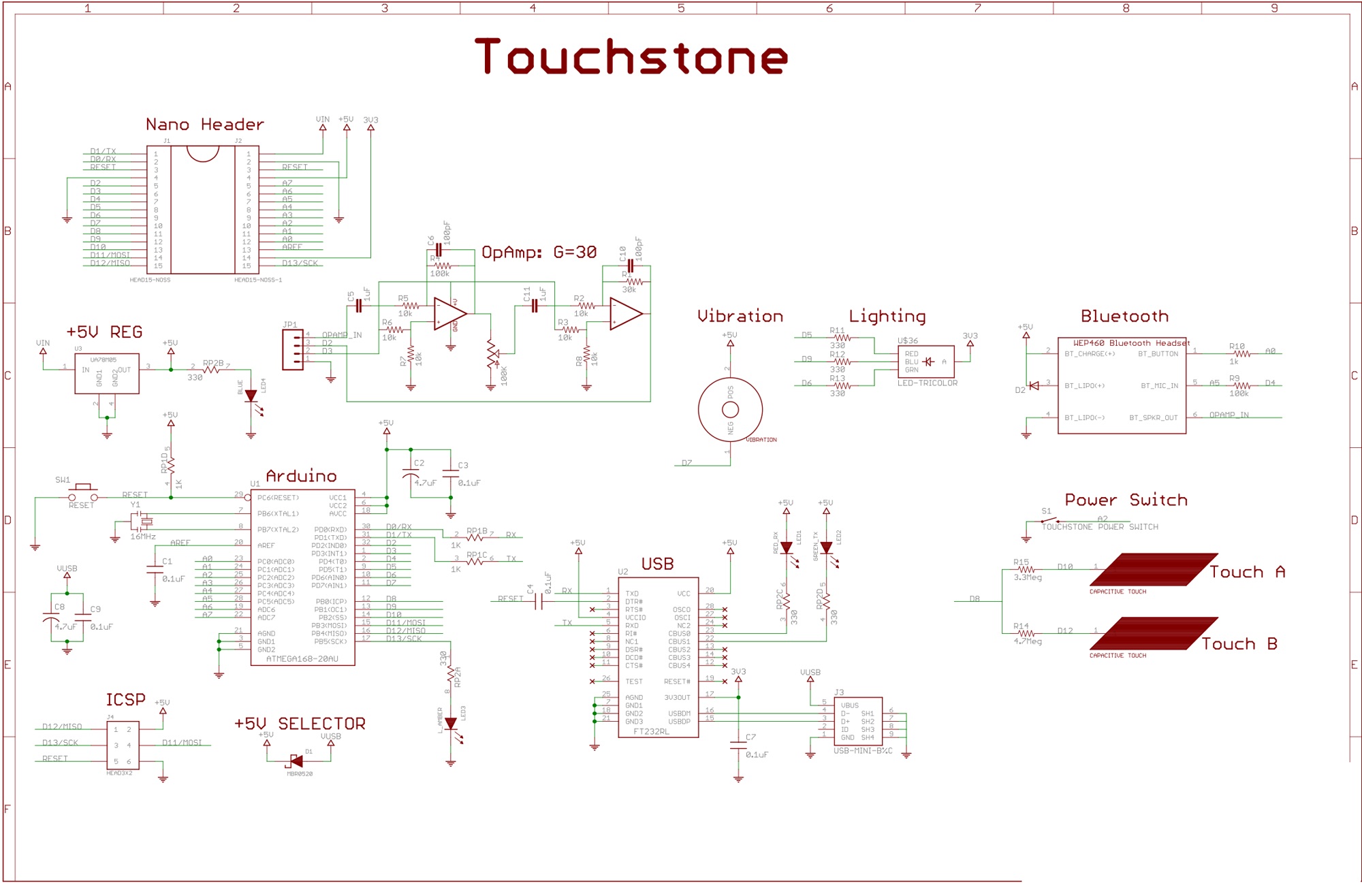
Inside each stone, an Arduino-based board drives the light and vibration, and a Bluetooth module connects the stone to its owner's handset, which carries the signal to the other phone and stone.
Each stone has two capacitive touch areas, and it only sends when both are touched. That way a brush in a pocket doesn't count; a deliberate squeeze does. The prototype electronics were designed with Teague.
We also built handset and app versions so people could compare them with the stone: a screen stone, a Glow app where two people see each other's light move, and a Fireworks app for drawing light together.
05Learning
People wanted it for comfort more than romance
Our research team ran in-depth interviews in T-Mobile's user experience lab in Seattle: ten with romantic couples in new, established and rekindled relationships, and four with people caring for children or elderly relatives. They tried the stone, the handset version and the apps.
The stone material and shape appealed. But the stone read as serious enough for emotional support and not playful enough for romance. Couples bond over banter and jokes, and wanted to tease each other, which the apps did better. Caretakers saw real use in a constant, quiet presence for lonely kids and older people.
The barriers were clear too: one more thing to carry and lose, the risk that it would be a novelty for a couple of weeks, and the fact that daytime phone messages are mostly logistics. People asked for stronger vibration and bigger glows, their own colors and pulses, colors that mean different things, and a form small enough to wear.
06Next
We wrote it up and filed a patent
We co-authored a short paper with a concept video for the MobileHCI conference, describing the stone as a dedicated channel for subtlety, play and privacy between people in close relationships.
We filed a patent application on communication between paired devices through touch and light. It was not issued.
The research gave a clear direction for a next version: customization to outlast the novelty, color-coded messages, and a wearable form.