Case study · T-Mobile
Yellowstone: more services for the whole family
At T-Mobile's Creation Center we asked how T-Mobile could offer more to families, and designed services each member could add to the family plan: for kids, parents, grandparents and even the family pet.
- Role
- Innovation producer
- Organization
- T-Mobile
- Partner
- Teague (industrial design and renders)
- Platform
- Add-on devices and services for the family plan, with parent phone apps and a family web service
In short
- 01Carriers had already reached almost everyone aged 16 to 50, so growth meant offering more to the families already on a plan, starting with the people at either end: kids and older relatives.
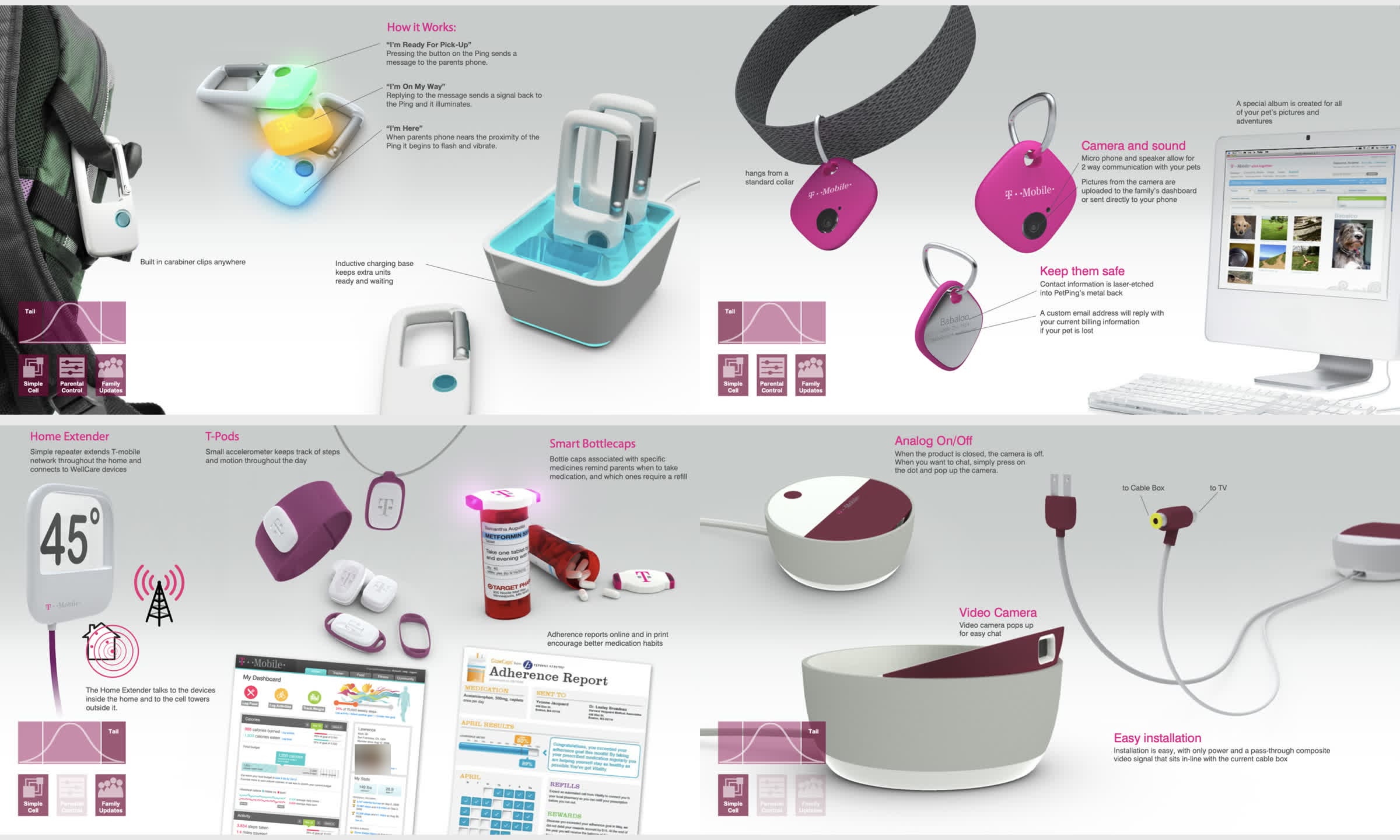
- 02We designed a set of family plan add-ons with Teague: check-in and talking devices for kids, ClonePhone parent controls, WellCare for older parents, EasyPhone, PetPing and Family Chat on the TV.
- 03In a validation survey, parents of young children most wanted oversight of a phone, and caretakers most wanted WellCare.
- field research and prior research mining
- concept funnel · 110 concepts to 25 to 5
- storyboards · line-drawn concept sheets
- industrial design · with Teague
- interaction flows and UI mockups
- quantitative concept validation · 393 web surveys
- realization plans and cost estimates
01Opportunity
The next growth was more for each family
Project Yellowstone, also called Extended Family, started from a simple chart. Mobile carriers had already reached almost everyone between about 16 and 50. More growth meant offering more to the families already on a plan, and the people least served were at the two ends of life: children, and older relatives whose needs were changing. We called them the tails.
So the question was what else a family plan could include. Each answer had to be something a family member would actually use, and simple enough to add to the plan.
02Approach
From 110 ideas to a few we could build
We combined field research with families, earlier Creation Center research and a review of competing products, looking at safety, reassurance, staying in touch and independence for each member of the family.
Across three opportunity areas we generated 110 concepts, drew 25 as line-drawn storyboards to test with people, and narrowed to a handful to develop.
03Ping
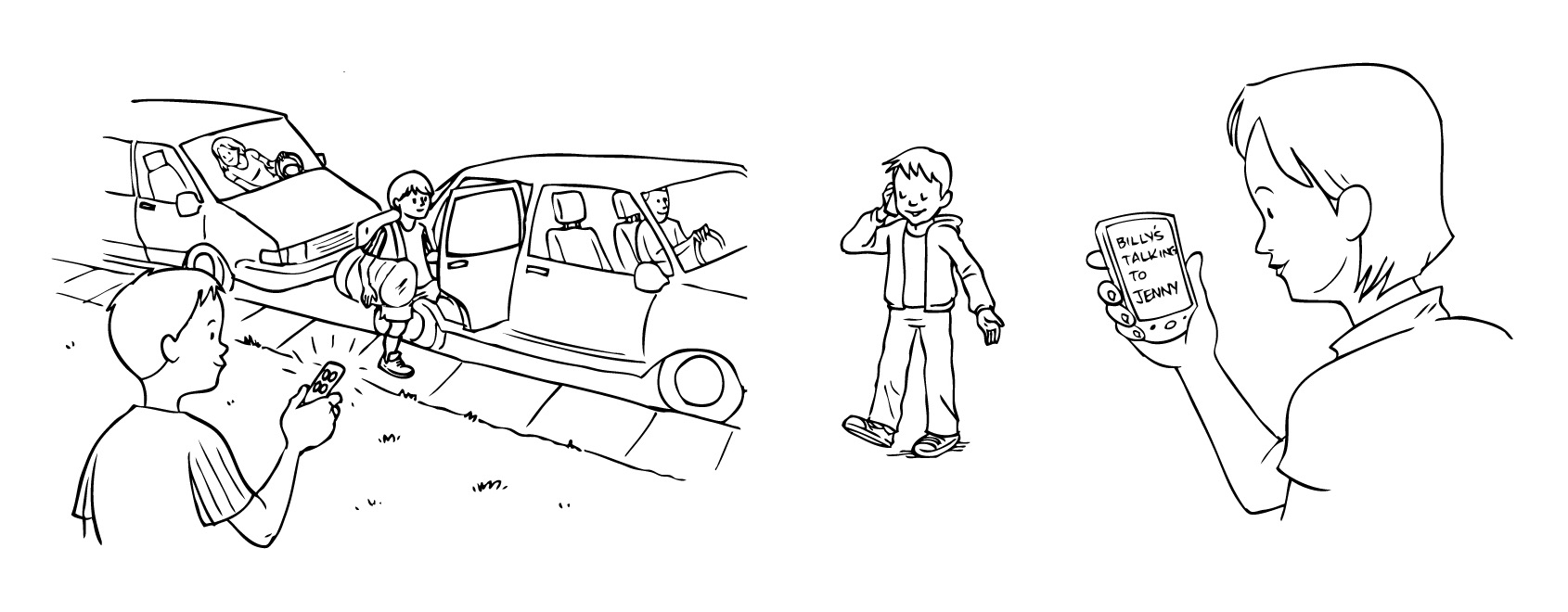
One button to check in, one to get picked up
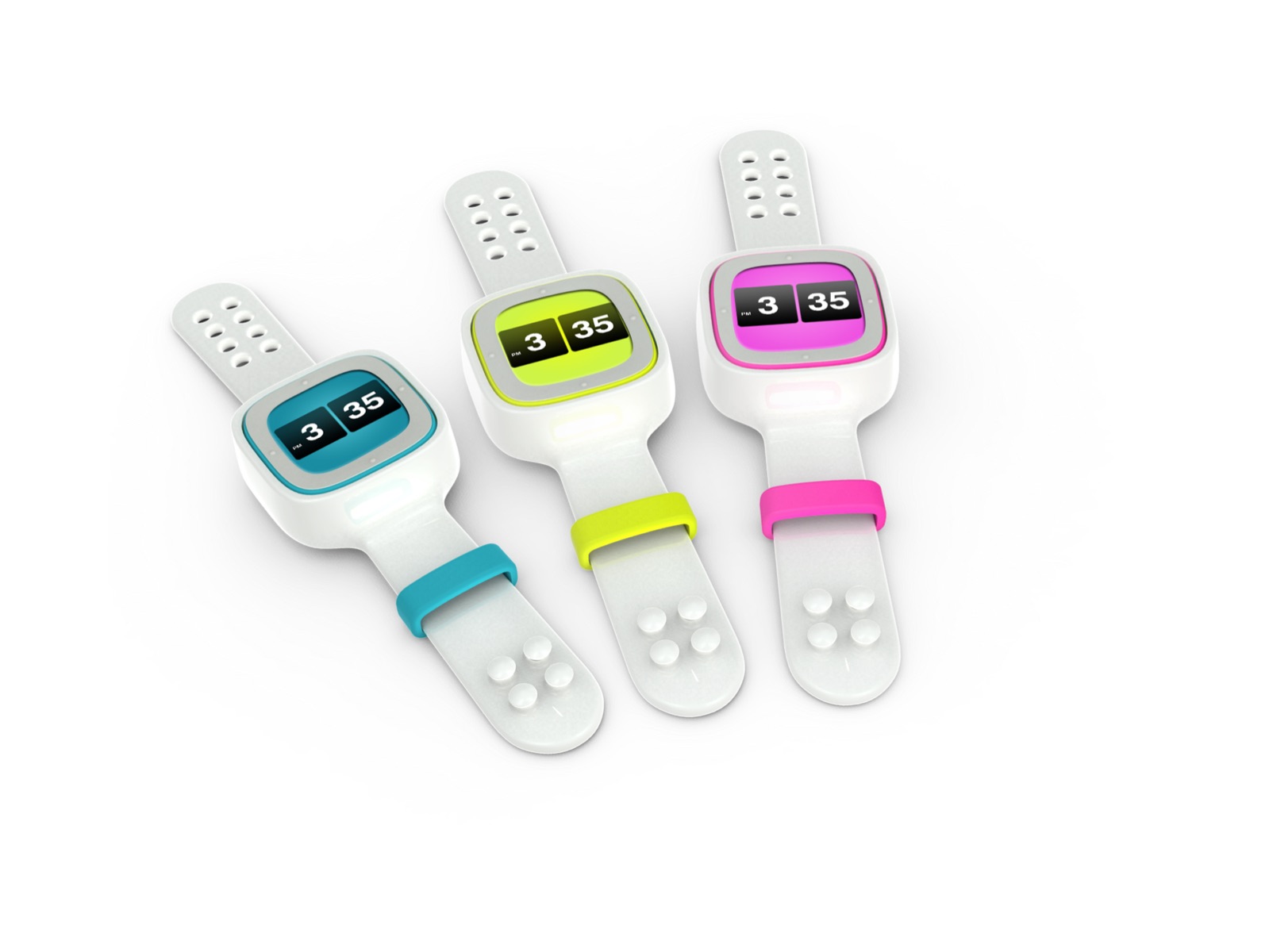
Ping is a small, durable tag with a carabiner clip for a backpack, belt loop or keys: a low-cost alternative to giving a child a phone.
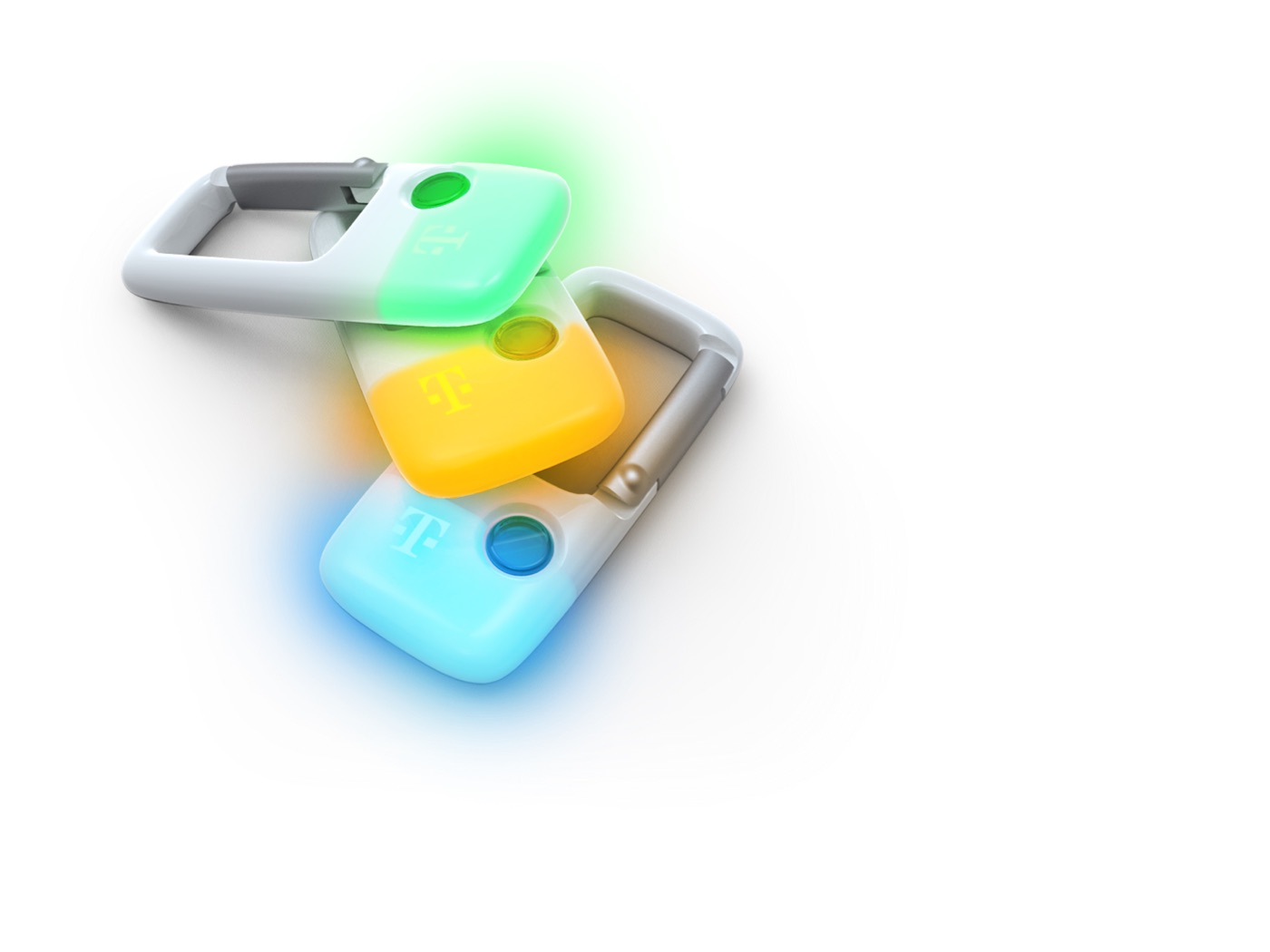
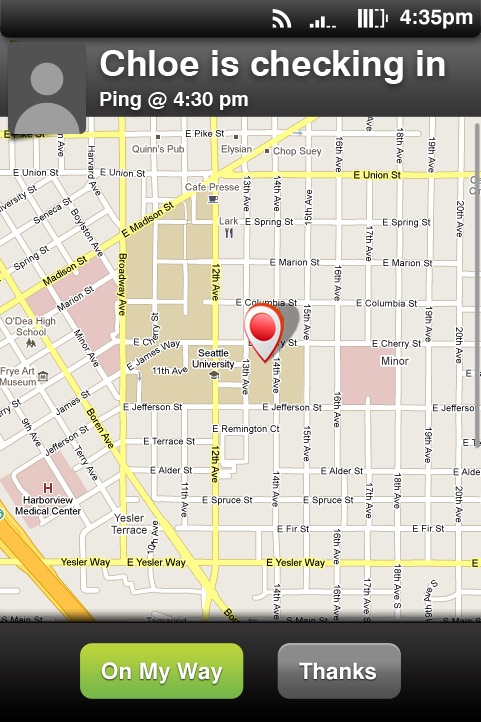
Press check-in and the parent's phone shows the check-in with the child's location; the parent taps Thanks. Press pick-up and the tag turns blue to show it was sent, yellow when the parent taps On My Way, and green with a chirp when the parent is close. The light is the interface, so a young child needs no screen to know someone is coming.
04Devices
A voice on the wrist, and a dialer made of toys
PingPlus is a watch-shaped step up, with two-way voice, simple texts and the child's location on a map. Its screen rocks in four directions for some of the feel of a touch screen at a lower price. A call request lets a child ask a parent to call back without interrupting them, and parents can set check-in timers. Games carry over to a website when the child plugs it into a computer, which also gets it charged.
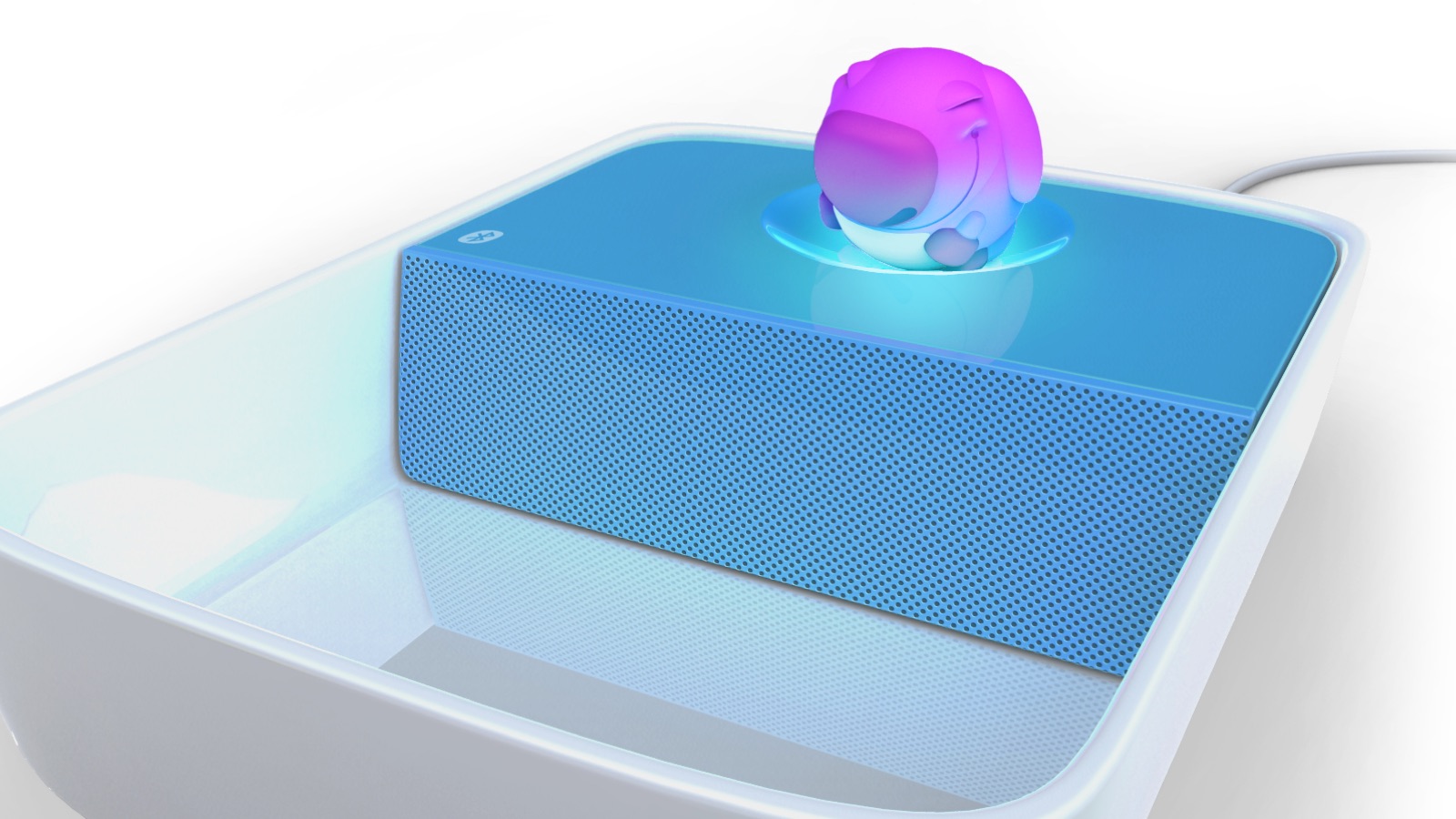
KidConnect is for children too young for that. Each small toy, called a DialPal, stands for one person, such as grandma. Put it on the call pad and it lights up and calls that person through the parent's phone over Bluetooth, on a speaker.
05Oversight
ClonePhone: the parent's phone mirrors the child's
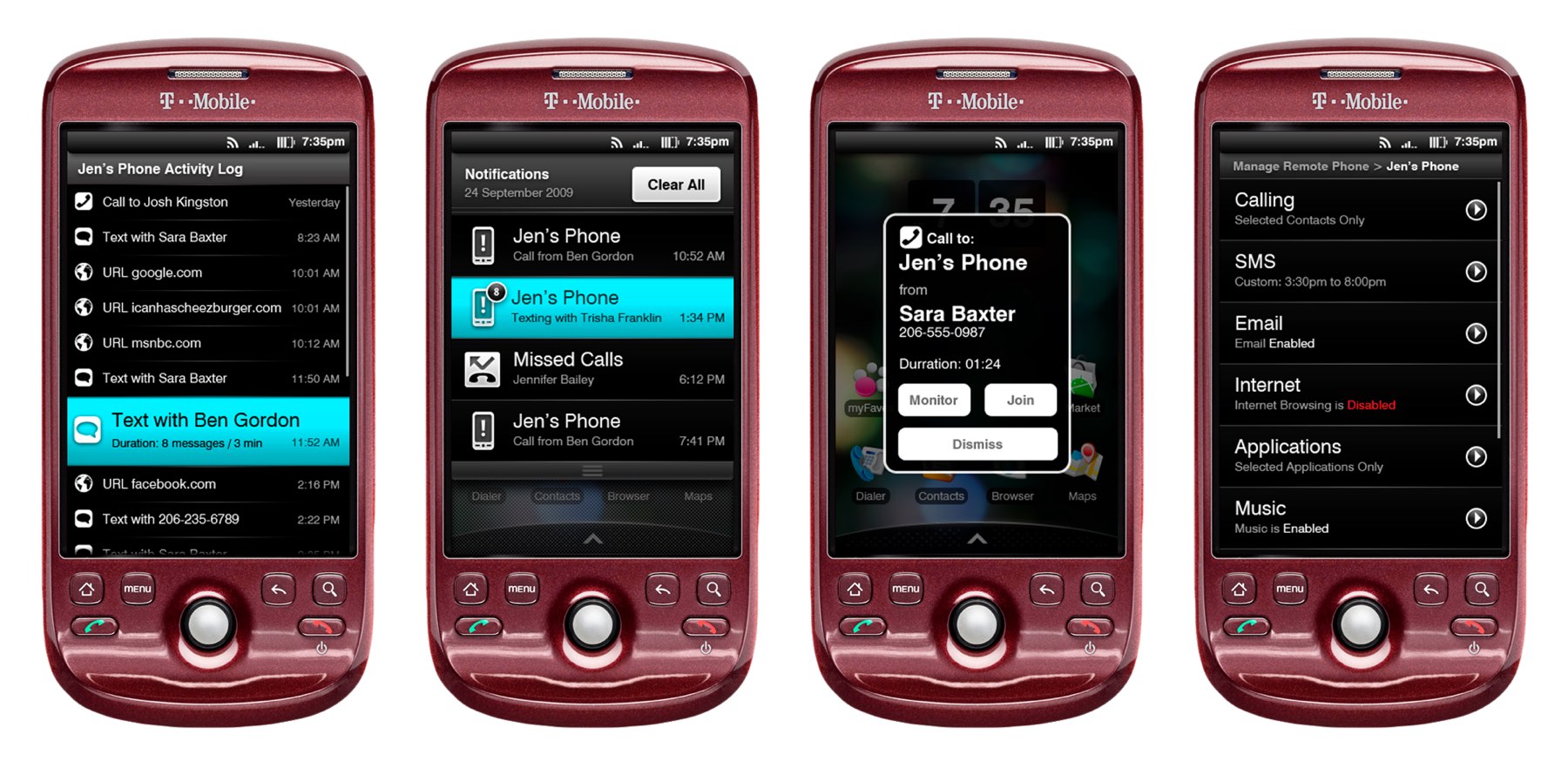
For kids old enough for a real phone, ClonePhone lets a parent's phone manage a child's at four levels: an activity log of calls, texts and web pages; live alerts; per-feature limits, such as calls only to approved contacts, texts only at set hours, or the internet off; and the option to listen to or join a call.
Privacy shaped the design as much as the features. The child must agree to a notice that the phone is monitored, and people calling in are told so and can opt out.
Family Manager took the idea further as a web and mobile service, adding spending limits, a family map, safe zones and scheduled check-in points.
06Across the family
Services for grandparents, the pet and the living room
WellCare helps adult children support their parents' health and independence: a wearable motion sensor, smart bottle caps that remind a parent which medicines to take and when to refill, and adherence reports online and in print.
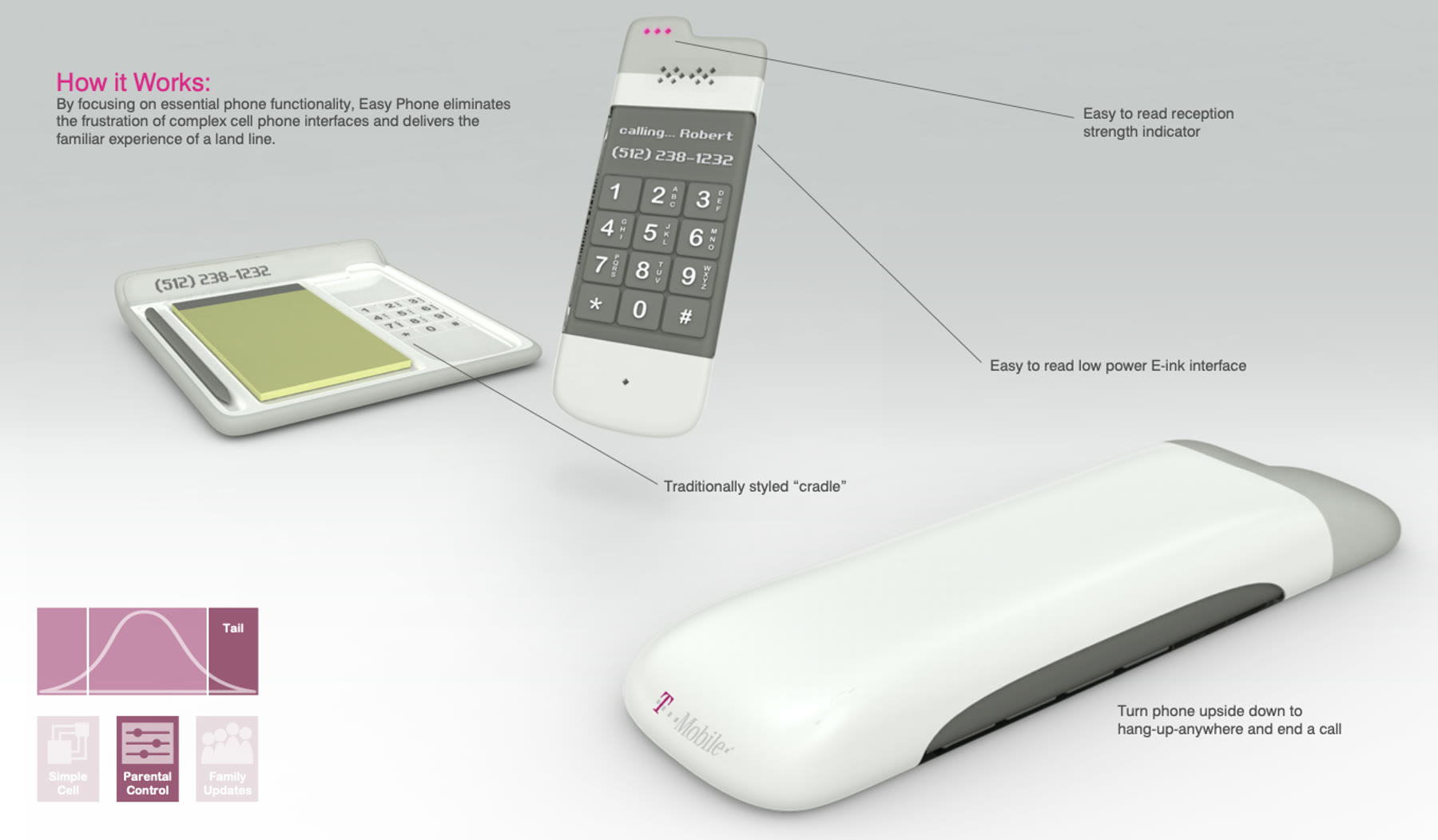
EasyPhone brings grandparents into the family plan with a home phone that keeps only the essentials: a large keypad, an easy-to-read screen, a traditional cradle, and contacts the family can manage remotely.
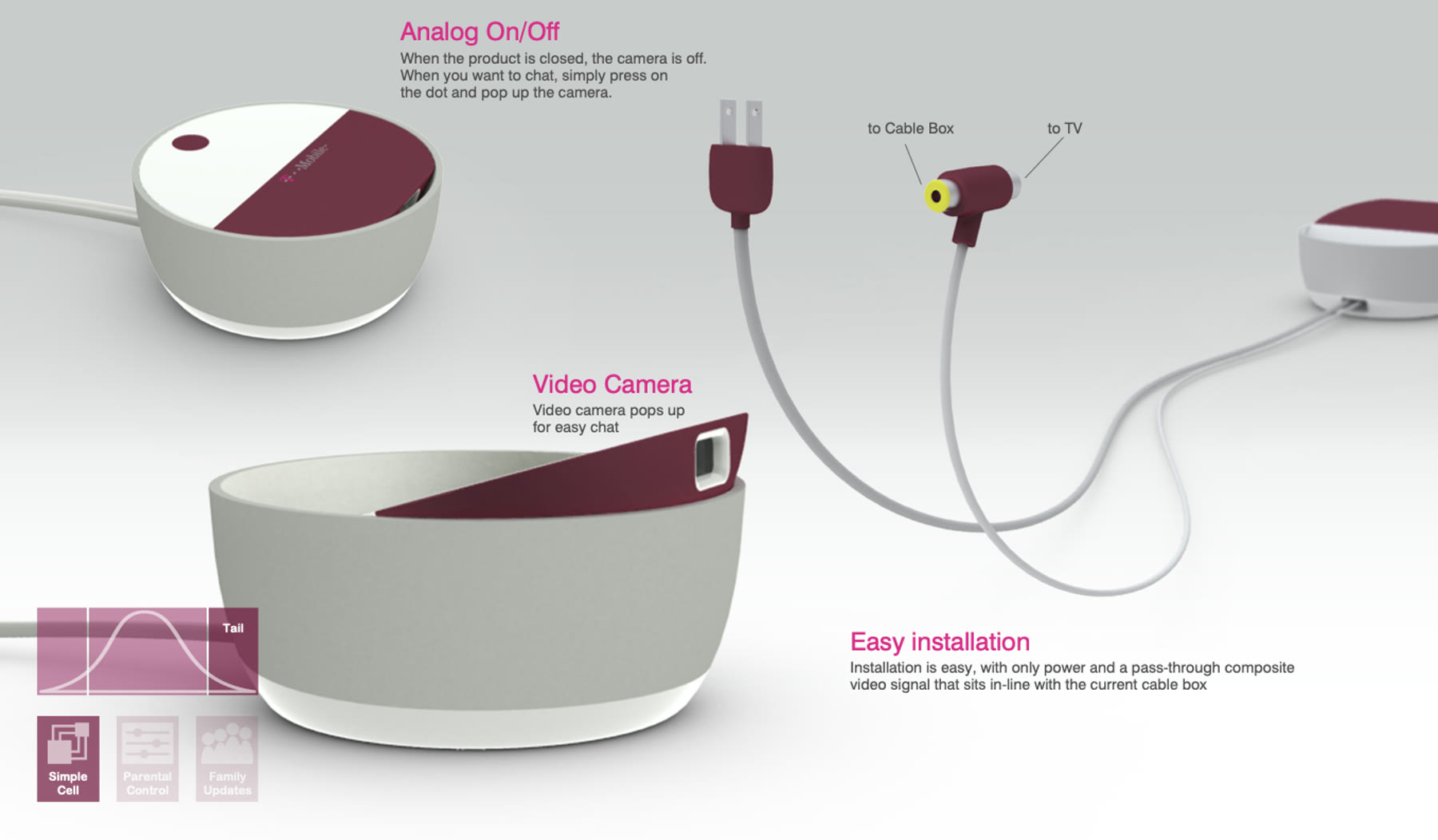
PetPing hangs from a standard collar to track a pet's location, with a camera and speaker, and photos that go to a family album. Family Chat is a pop-up camera for the TV, so the whole family can video chat from the living room over the T-Mobile network, without broadband.
07Learning
Parents wanted oversight; caretakers wanted WellCare
An outside research firm ran 393 web surveys with wireless customers in Portland and Chicago, including 69 parents with a child aged 6 to 11. The interest index counts people who rated a concept highly on appeal, relevance and interest.
Among those parents, Family Manager scored highest of any concept, PingPlus came next, ahead of the simpler Ping, and KidConnect came last with every group. With caretakers, WellCare scored highest.
08Next
Plans for building, buying or partnering
We took the concepts to T-Mobile's innovation board, each with a build, buy or partner plan and phased cost estimates. Family Manager was planned as a service T-Mobile would own and build. For Ping and PingPlus we proposed buying or partnering for the hardware, sharing a back end with T-Mobile's family locator service, and an upgrade path to the child's first phone.